Steps to a Happy Dog and Happy Printmaker

Prints, Small Print Store
Shadow, custom linocut dog portrait

In Progress – Shadow, custom linocut dog portrait

I love my dogs. You love your dogs. We all love doing things for our dogs, and we love to give gifts to friends who have dogs. One can never go wrong with a dog gift. Unless of course you are giving a dog as a gift which is I highly discourage. Unless of course you are a parent giving it to your children, but secretly you wanted the dog and you plan to take care of it.

This is a gift being given by a sister to her brother. “Shadow” is a very important family member and seen by his pose, a little character.

I began Shadow a week ago, looking through several photos. I was struck by two of them, one a close up profile which I love, but I kept coming back to this pose, it became my favorite.
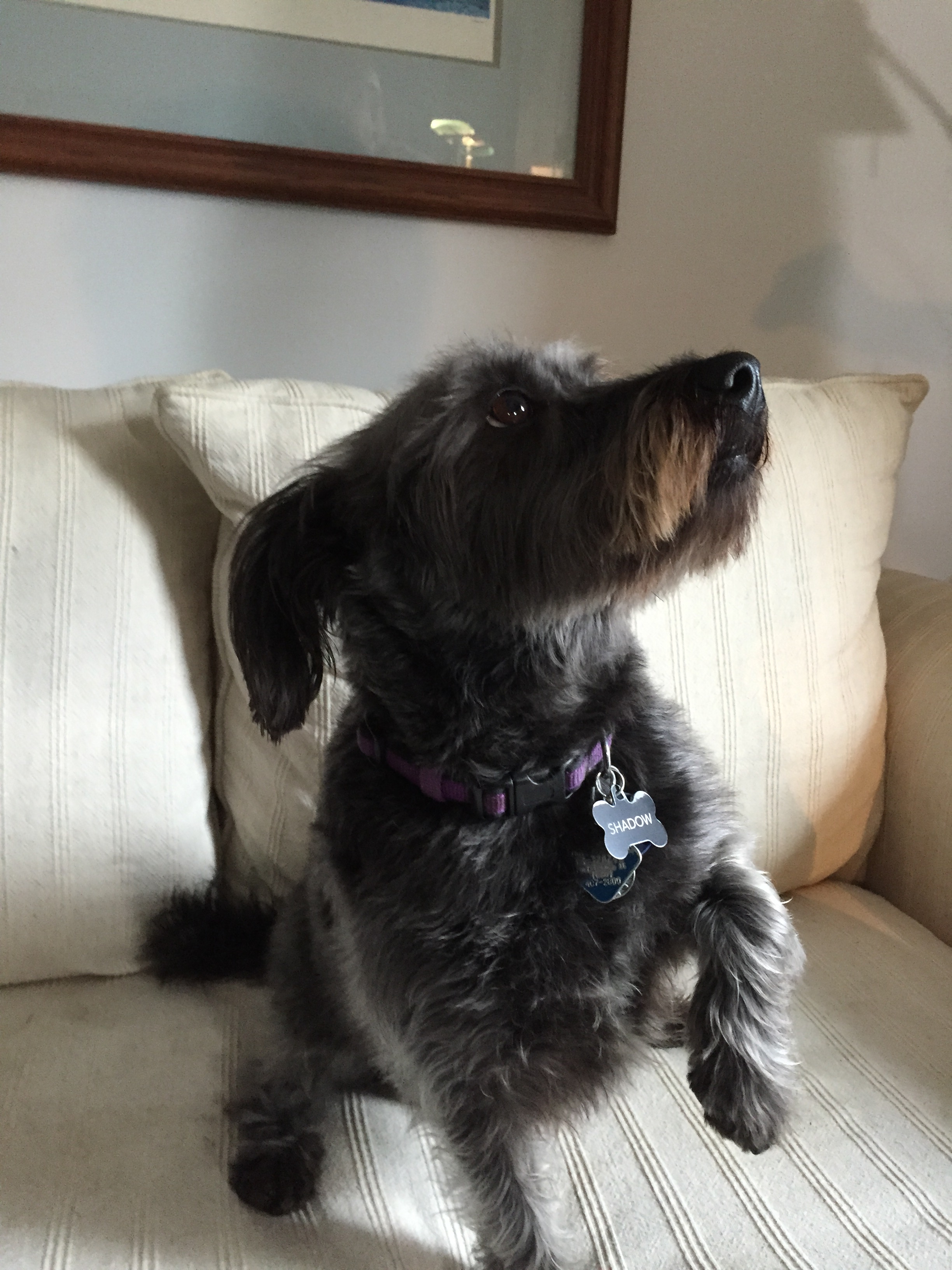
Shadow, photography for linocut

Shadow, photography for linocut

I often have to tease out details by lightning the photos or sharpening them in order to see disguising characteristics. I then draw it onto a linoleum block.

Drawing of Shadow, reversed on the block

Drawing of Shadow, reversed on the block

Once the block is drawn it can take anywhere for 4-8 hours to carve. Normally I carve from 4pm until bed time, so that I can print during the best day light.
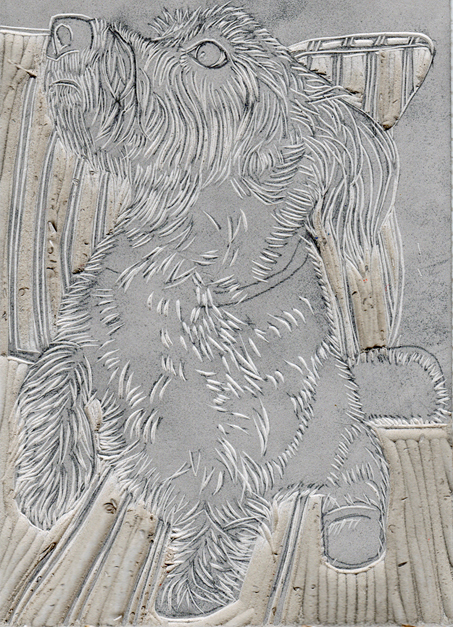
First carving of linocut

First carving of linocut

This is how the linocut looked when I first printed it. I made one print, then carved a bit more, made another, printed again. I generally make 3-4 “proofs” that is seeing what it looks like, cleaning the block, inking it again and reprinting until I get what I want. On bad days that can take up to 10 separate inking, printing, cleaning, carving inking, etc.

The final print I made of Shadow is dark grey, despite looking black in this photo, he is grey:

Shadow, custom linocut dog portrait in dark grey

Shadow, custom linocut dog portrait in dark grey

I am hanging on to him a few more days as I may want to do a little more carving, and experiment with the ink to make him just a bit more grey.

If you want a custom dog portrait it takes about 1-2 weeks, and you can order from my Etsy Store. The details are there.

A custom carved linocut portrait of Sam.

30 prints 30 days, Prints, Small Print Store
Sam Linocut Custom Dog Portrait

Sam Linocut Custom Dog Portrait

Lisa Studier left this morning and I got into the studio to catch on  a portrait that my dear friend Peggy requested. Honestly, at first I was not so sure I could do a pet portrait. But have already done one for her I welcomed the second opportunity and it was a blast.

The custom linocut dog portrait is a gift for her daughter, who also supplied the photos for me to work from. I drew “Sam” onto a 5″ x 7″ linoleum block, carved him out, and set out to print.

Carving Linocut of Sam

Carving Linocut of Sam

It was a rough day in the studio. It was very cold, colder inside  than outside, some ink colors appeared almost frozen where others were way too runny. I printed and printed and got nothing. I cleaned up, came in the house, and tried again today. And it was perfect. I got a great print of Sam. In addition I made 5 folded gift/greeting cards. These cards are pretty sweet and since it is a gift Peggy can write a message to her daughter in it, plus her daughter will get 4 others she can send out. She can always get more later if she likes.

4" x 5" folded hand printed linocut cards with custom carving

4″ x 5″ folded hand printed linocut cards with custom carving

I am going to offer to make up to 3 dog portraits a month. They can take 10 to 15 hours to make, so doing three a month would be super fun. I am beginning some big 24″ x 36″ linocuts all based on mountains, hiking, wilderness adventure in for my fall exhibition and I need to make sure I leave time for those. They take about 60 + hours to carve, but they will be amazing, just as amazing as little Sam here. You can order a custom dog portrait at my Etsy Store. 

P.S. The color is the same on all of them, despite looking different here.  The photos are a bit crappy because they are from my cell phone. I still need to get a new camera.

Sam, Linocut Dog custom dog portrait

Sam, Linocut Dog custom dog portrait

Mystical Monsters and Maidens Linocut Series

30 prints 30 days, Prints, Small Print Store
Cyclops with UFO's Linocut

Cyclops with UFO’s Linocut

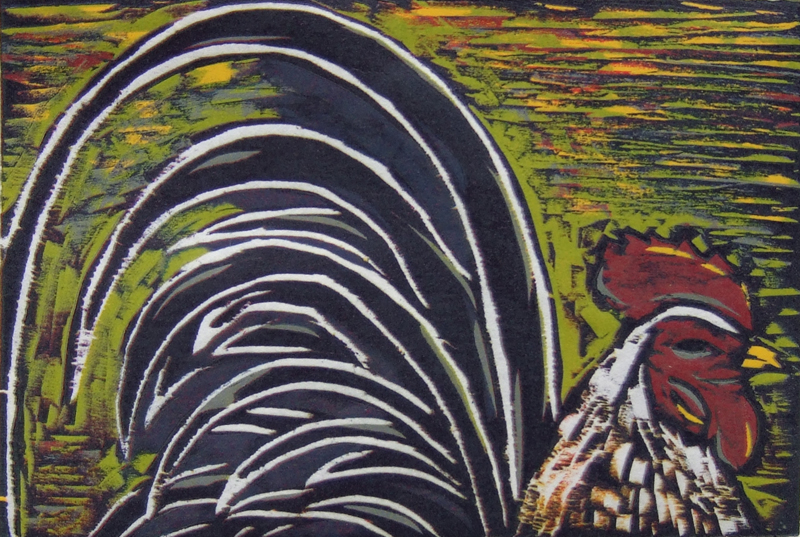
That’s not a chicken. Nope, it is not. After a great 10 days with Lisa Studier at the Press working on her reduction technique Chicken Prints, she flew back to NYC, and it is back to Print of the Day Project.

Mermaid

Mermaid

What is new is that I swapped out my 4″ x 6″ linoleum blocks for 5″ x 7″ blocks in order to be able to make more detail and more complex prints. The great thing is, while the prints are larger they are only a couple of dollars more. I want to keep them very inexpensive so that people can feel free to collect as many as they like.

Cyclops with UFO and Mermaid 10" x 8" linocuts

Cyclops with UFO and Mermaid 10″ x 8″ linocuts

I did a three mock ups of rooms with this new series of Monsters and Maidens.

Mermaid Linocut by Stonetrigger Press available on Etsy

Mermaid Linocut by Stonetrigger Press available on Etsy

Cyclops with UFO's  Linocut by Stonetrigger Press available on Etsy

Cyclops with UFO’s Linocut by Stonetrigger Press available on Etsy

There are now 59 prints and drawings available on my Etsy store. and by the end of the week I plan to make that 62 items. More mythical monsters tomorrow night.

Reduction Printing Day 7 with Lisa Studier

Uncategorized
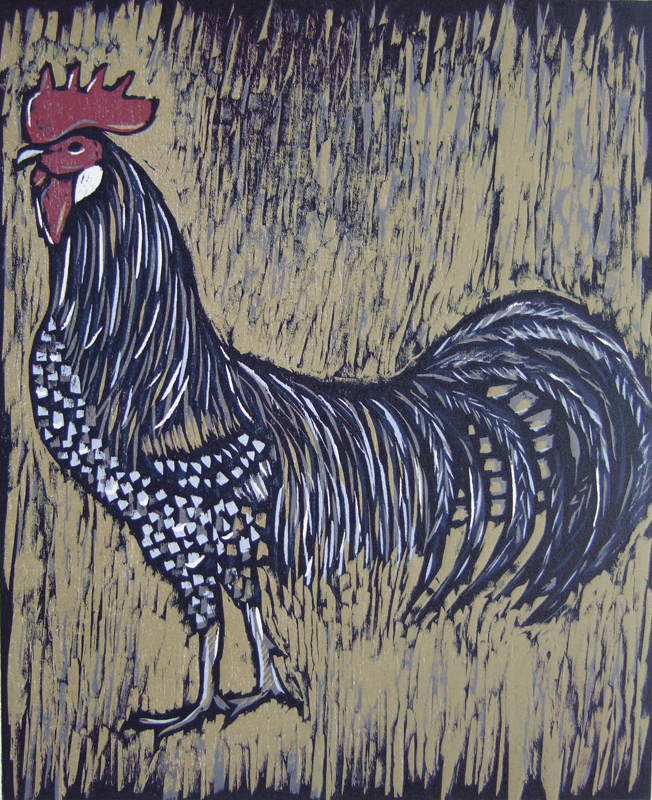
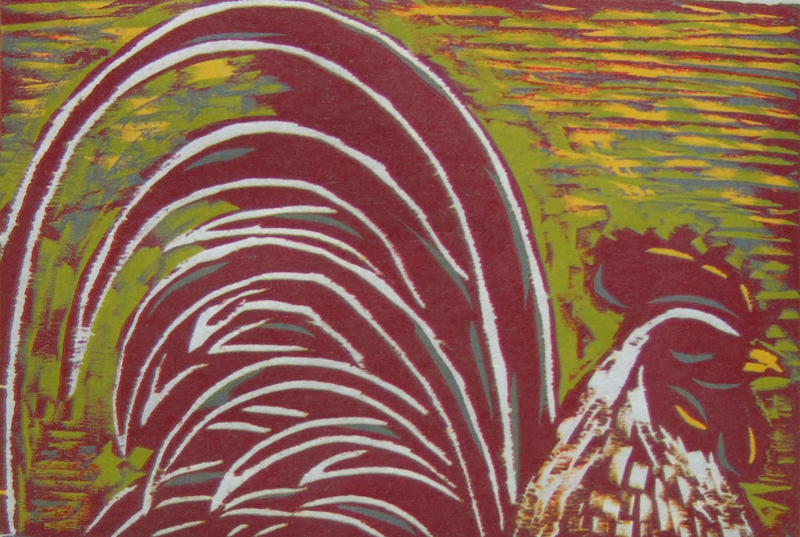
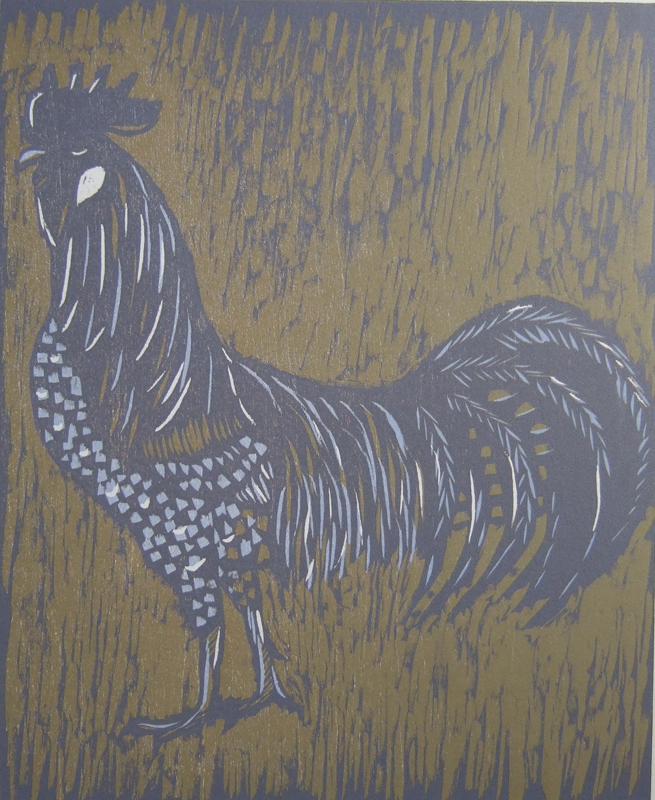
Black-tailed Japanese Bantam finished print

Black-tailed Japanese Bantam finished print

Today is my last blog post, as I’m heading back to NYC tomorrow morning. My time here went by so fast, and I’m sad to leave, but I’ll be back this summer.

I managed to complete three prints during my time here, and I hope you all enjoyed the blog posts and my explanation of reduction printing. It really is a fun technique once you get the hang of it.

These three limited edition fine-art woodcut prints will be on the Stonetrigger Press Etsy store later tonight or tomorrow if you’re interested in adding one to your art collection! (They will be available on Etsy soon but will not actually ship for at least two weeks due to drying time–I just printed the last color today and they are drying slow in the cold weather)

Thanks so much for reading, and see you again this summer!

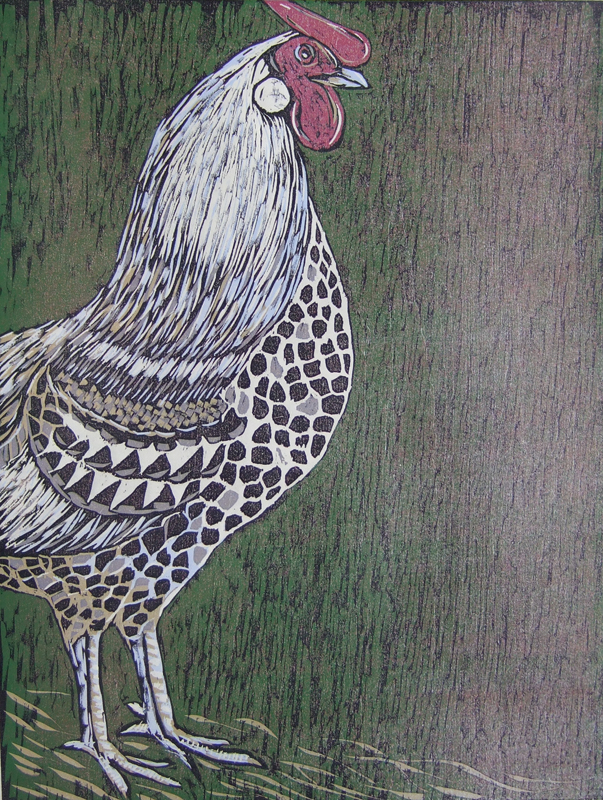
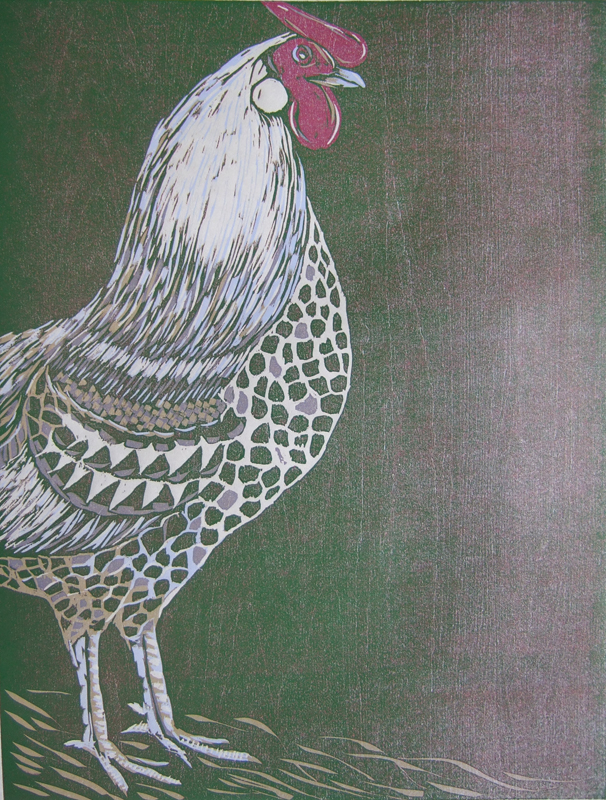
Silver-spangled Hamburg finished print

Silver-spangled Hamburg finished print

Blue Andalusian finished print

Blue Andalusian finished print

Reduction Printing Day 6 with Lisa Studier

Uncategorized

Picasso is often credited with inventing the reduction printing technique. From 1958-1963 he created approximately 100 reduction linocuts. I haven’t been able to find much information online about the history of this technique, but from what I’ve found it seems to have been in use by small commercial printers and taught in art schools for some time before Picasso brought it to wider attention. He was probably introduced to the technique by a commercial printer, and adopted it due to his frustration with the slowness and discontinuity of having to cut each color area on a separate block.

Today I printed the fifth color on all the prints. Tomorrow will be my last day in New Mexico, so be sure to tune in to see the finished prints. For now, here are all five stages so far of the Silver-spangled Hamburg.

Fifth color

Fifth color

Fourth color

Fourth color

Third color

Third color

Hamburg chicken, second color

Hamburg chicken, second color

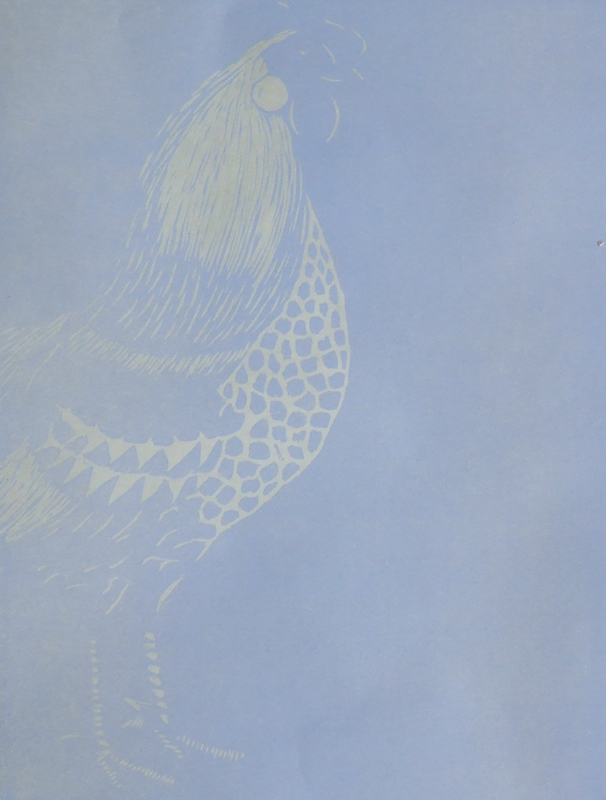
First color

First color

Reduction Printing Day 5 with Lisa Studier

Uncategorized

Today I finished the fourth color on each print. They are coming along, but are not as successful as I had hoped. I usually feel this way at some point in the process–the nice thing about reduction prints is that with each color printing, the look of the print changes completely. Who knows, after I print the fifth color tomorrow I may decide I love the prints.

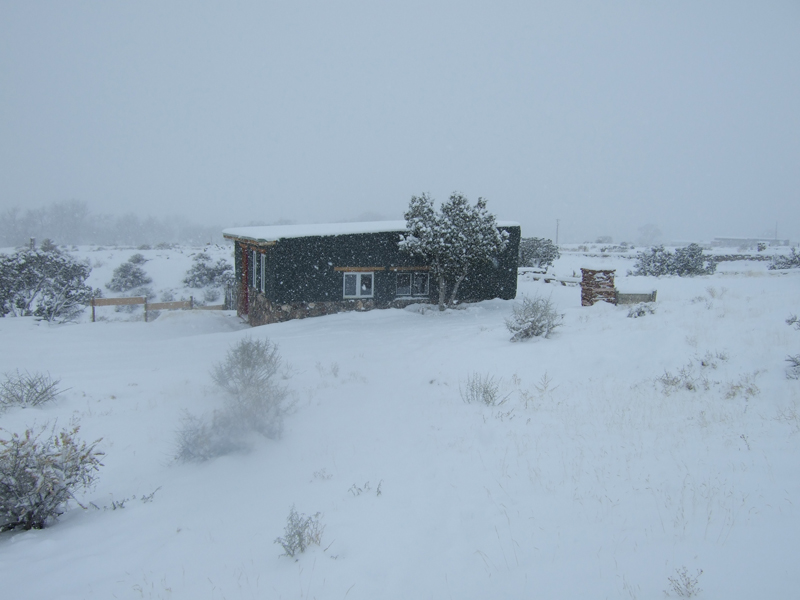
Printshop in snowstorm

Printshop in snowstorm

I woke up to a big snowstorm this morning, about 10 inches of snow! All this week, the temperature has been around freezing. We don’t have a thermometer (or heat!) in the printshop, but it’s probably been in the 30’s inside all this week. This is not ideal for printing. The ink has been very stiff, especially certain colors like red and blue that tend to be stiff to begin with. So it is harder to work with and needs to be thinned out which can be a delicate balance to not add too much thinner.

The cold is also affecting the drying time of the prints. Printing over and over on top of previous color layers is best done when the previous layers are dry. They don’t have to be bone dry, but it’s best to at least let the prints dry overnight before printing the next color. In this cold weather, my prints are not drying at all and now that I have several layers built up I had to print today on very tacky prints. This can cause all kinds of problems, especially with registration.

So let’s review where I am with the Black-tailed Japanese Bantam. Here are the four stages so far, with colors printed in this order: yellow, green, gray, red.

Fourth color

Fourth color

Third color

Third color

Second color

Second color

Print with first color done

Print with first color done

reduction printing day 4 with Lisa Studier

Uncategorized

Today I’m going to talk about registration. But first, let me recommend this excellent YouTube video featuring Santa Cruz woodcut artist Bridget Henry. It shows her making a reduction print from start to finish, and does a great job of explaining and showing the process.

So you might be wondering how I line up the block in the exact same spot each time I print. This is called registration, and if it is off by even a fraction of an inch, the underlying colors  will be messed up and printed over.

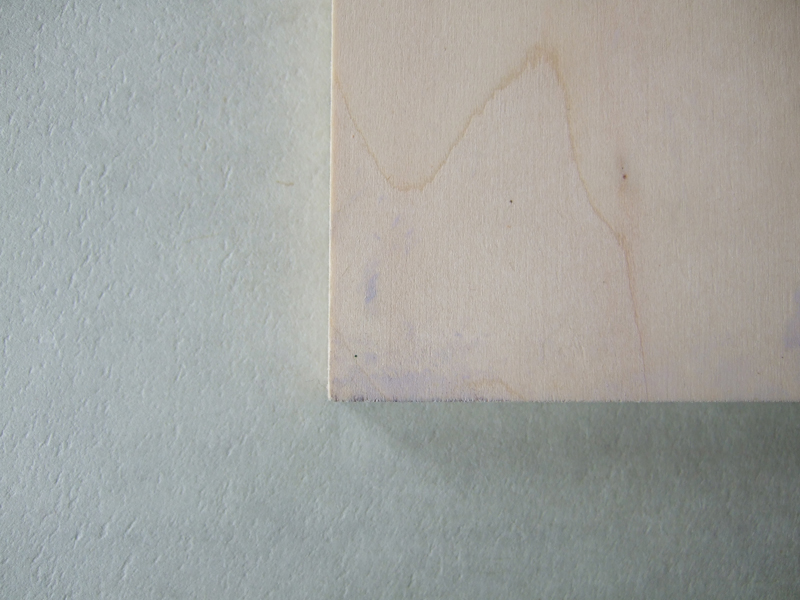
Block on paper ready to print--no ink visible around edges

Block on paper ready to print–no ink visible around edges

In this photo, the block is on the paper in the correct spot, covering the colors already printed. No ink is visible around the edges of the block, so this means it is registered correctly and ready to print.

There are various registration methods. If you watch the video I recommended, you’ll see that artist using a wooden frame that she sets the block in so it is held in exactly the same spot each time. The paper is then attached to one end of the frame on pins so it falls over the block in exactly the right spot.

Third color

Third color

I have to confess that I don’t use any of these methods. I learned reduction printing when I took a class about 12 years ago with Ben Rinehart. Ben is an amazing artist who makes, among other things, fantastic reduction prints. He taught me to do the registration using a method he calls “plop and drop.” Quite simply, it means I line up the block on the paper by eye. I know that sounds crazy, but with practice your hand/eye coordination improves and it becomes easy. It does require focus and concentration, and it helps to do everything in exactly the same order and rhythm each time. I like the simplicity of it.

Third color

Third color

Today I printed the third color on all three prints. I used the same color for all of them because it was cold in the printshop and I didn’t want to clean off the roller and ink slab multiple times. I mixed up a purplish-gray, and now the images are really starting to take shape. I hope to do six colors, so I’m halfway done!

Third color

Third color

Reduction printing day 3 with Lisa Studier

Uncategorized

Today I’m going to talk about color and ink. I use oil-based lithographic ink, but block printing ink works well, too. I like litho ink because it has a really nice, smooth texture. Etching ink is too coarse, so don’t use that.

Cans of litho ink

Cans of litho ink

Oil-based ink has a beautiful lustrous quality to it that I feel gives the image a lot of depth. However, it does require cleanup with a solvent such as mineral spirits. I’ve never tried water-based ink, and in fact I’m not sure it would work out with reduction printing on woodblocks. The block has to be cleaned after each color printing, and I don’t think repeated cleanings with water would be good for a woodblock. Water-based ink would probably be fine with a linoleum block.

As far as color, it is best to build up the layers from light to dark. The ink is not totally opaque, so underlying layers will impact the tone of colors printed on top of them. If you want a really bright yellow but you’ve already printed dark blue, you’re out of luck.

Horned Lizard II reduction woodcut

Horned Lizard II reduction woodcut

In this Horned Lizard print that I made at Stonetrigger in 2013, I printed the light yellow layers first, then orange, red, brown, and finally the darkest purple/black. I did a total of six colors–you may not be able to see them all unless you’re looking closely at the print. I often print layers of color that are very close in tone, for example first a bright yellow and then a slightly darker yellow. It’s subtle, but it helps to build up depth in the image, almost like shading with a pencil.

When I start a print, I have a general idea of what colors I’m going to use, but it’s very, very general. Once I start printing and actually see how a color looks with what I’ve already printed, I often completely change course and make very different decisions than what I was thinking when I started. My biggest piece of advice for reduction printing is don’t try to plan it all out in advance. Trying to match an exact plan will drive you crazy, and you really can’t know how the colors will look together until they’re on the paper. Being willing to adjust as the image develops will make you much happier throughout the process.

Hamburg chicken, second color

Hamburg chicken, second color

This is the third print I’m working on this week, a Silver-spangled Hamburg chicken. The first color was blue, second color a brownish gray. I hope to add four more colors, but at this point in the process I have no idea what they will be, except that they will get progressively darker. Stay tuned!

Reduction Printing Day 2 with Lisa Studier

Uncategorized

Today was sunny and a bit warmer, and it was an excellent printing day. I printed the second color on three separate prints, which means I cranked a block through the press 21 times. With reduction prints, you have to print the entire edition all at once. Here is the Black-tailed Japanese Bantam with the second color printed. As you can see, I cut away the parts I wanted to keep yellow, and then printed the second color, green.

Second color

Second color

At this point, there is no going back to the previous state. If I decide now that I wish I had kept another spot yellow, it is too late. Also, I cannot make any more. I printed 7 of these, if I don’t mess any up along the way my edition size will be 7, but it can’t be more. Now that I’ve done two rounds of cutting, I can’t go back to the earlier state. This is why reduction printing is sometimes known as “suicide printing.”

I am working on two other chicken prints as well, here are photos of the first and second colors for the Blue Andalusian chicken.

First color

First color

Second color

Second color

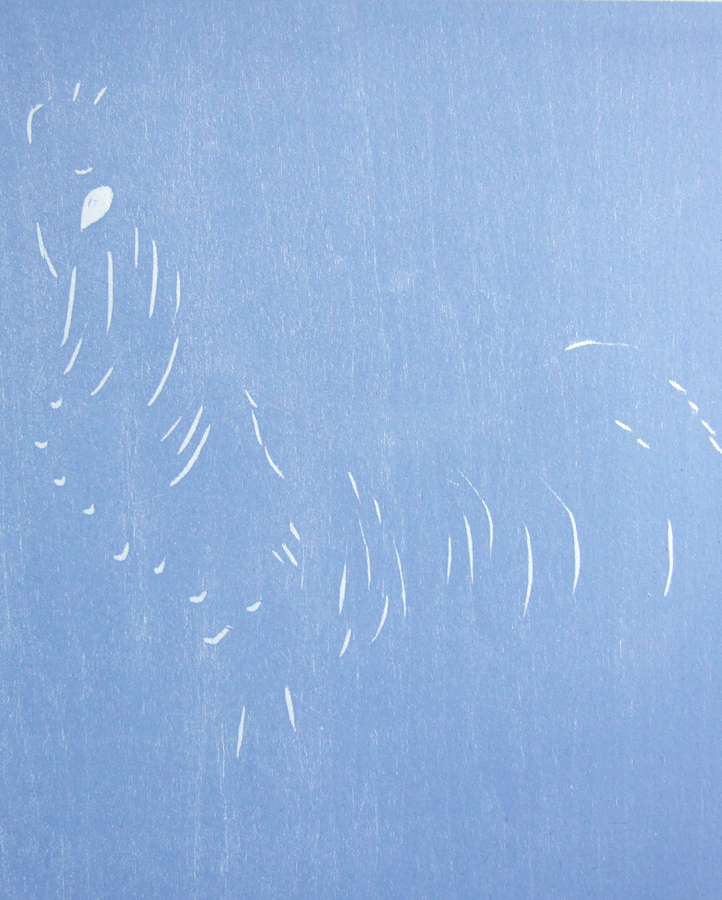
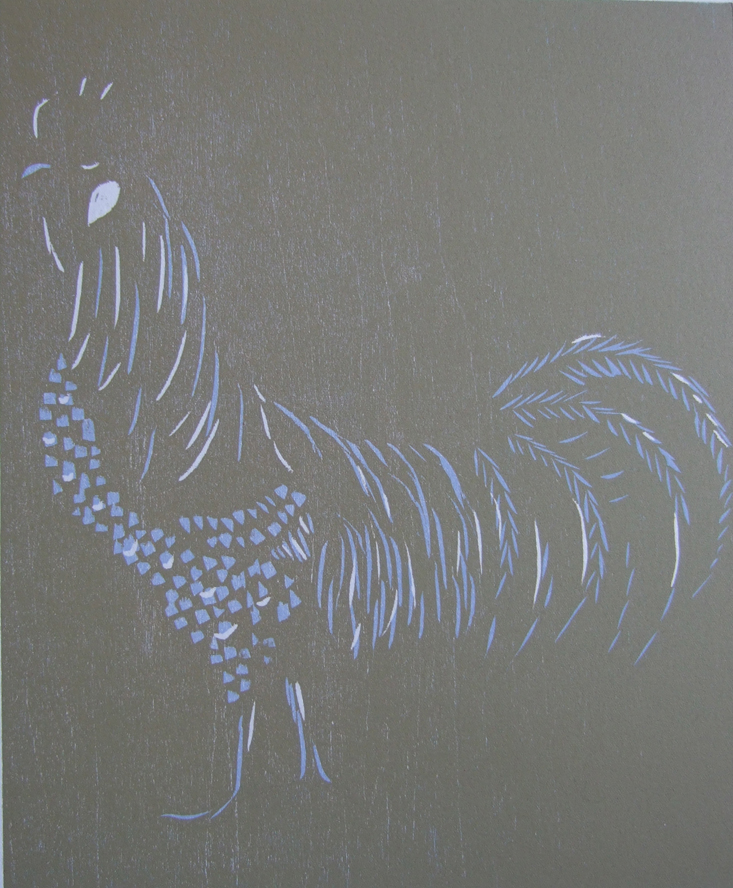
You can see that the first step was cutting away the parts I wanted to keep white. Then I printed the first color, blue, over the entire block. Next I cleaned off the block and then cut away the parts I wanted to keep blue. And finally I printed the second color, a grey-ish brown. Now you can see the original white lines plus the blue lines. I love watching the image gradually emerge as each color is printed.

In tomorrow’s post, I will talk more about color and the registration process.

Reduction Printing Day 1 with Lisa Studier

Uncategorized

Hello everyone! I’m super-excited to be in New Mexico. The printshop is cold, the ink is stiff, but I’m powering through and hopefully will be able to complete 3-4 prints during the time that I’m here.

So reduction printing is a relief technique that can be done with either wood or linoleum blocks. The idea is to create a multi-color image using only one block by cutting away more of the block in-between each color printing. It can be hard to conceptualize at first, but I’ll go through it step by step this week.

Currently I’m working on a series of portraits of different varieties of chickens. The one I’ll be using as an example today is a Black-tailed Japanese Bantam. My first step was to look up images of the chicken online, and draw an outline on the wood block. Sometimes I draw, sometimes I use transfer paper to trace an image. Either way, once I have the design I want, I go over it in Sharpie marker so it won’t be washed away when I clean the ink off the block later.

After the image is on the block, the first step is to think about what part(s) of the image you want to keep the color of the paper. You don’t have to do this step, you could just print a solid block of color, but I want to leave some white in this image so my first step will be cutting away anything I want to keep white.

Wood block with first cutting stage done

Wood block with first cutting stage done

You can see here that I’ve cut away a bit of the chicken’s body and some of the edges of the tail feathers.

My first color is going to be yellow. In this case, I used Graphic Chemical’s Golden Yellow straight out of the can. I almost always mix my own colors, but I really like this yellow so didn’t mix in anything else.

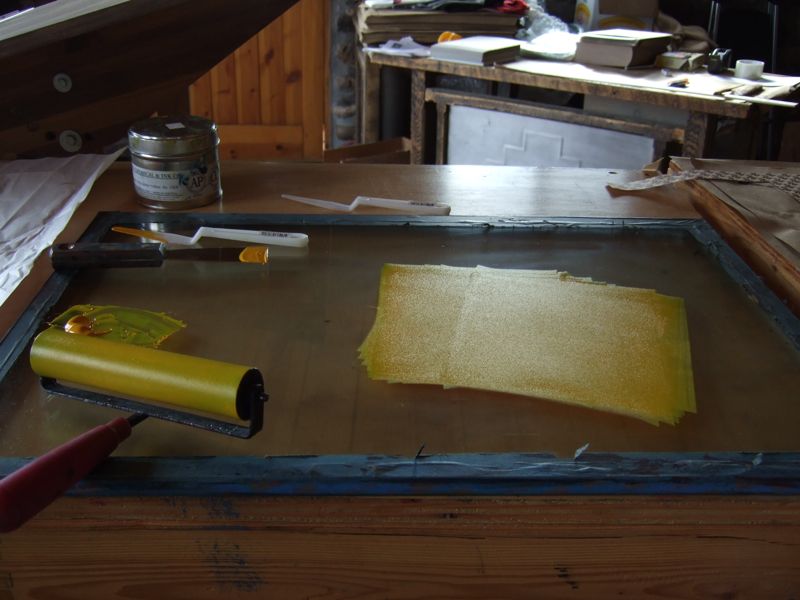
Here is a photo of the ink rolled out on the glass slab.

Ink slab

Ink slab

I roll out the ink with the brayer, and roll a smooth, even coat onto the surface of the wood block. The ink does not go down into the cut lines, so those portions I’ve cut away will remain the color of the paper throughout the entire printing cycle. Once a part of the block is cut, nothing will ever print over that spot.

Wood block with first color rolled on

Wood block with first color rolled on

I already had paper torn and ready. For this print I’m using Thai Mulberry paper that is kind of an off-white, natural color. So my paper is ready, my block is inked up, and I’m ready to print!

Well, almost. First I had to shake out all the spiders that were inside the rolled-up press blankets. I guess this is one of the dangers of a rural printshop!

spiders!

spiders!

There were many more that scurried away as I was grabbing my camera

Anyway, I got the press set up and ready to go. The first step of printing is very easy, just center the block onto the paper, inked-side down, then flip it over so the paper is on top of the block, cover with newsprint and the blankets, and run through the press.

Here is the completed stage 1 of the print. You can see that all the parts where I cut away the block remained the color of the paper, and all the rest is yellow. Tonight I will think about two things: what parts of the image do I want to keep yellow, and what will be my next color. Tune in tomorrow!

Print with first color done

Print with first color done